
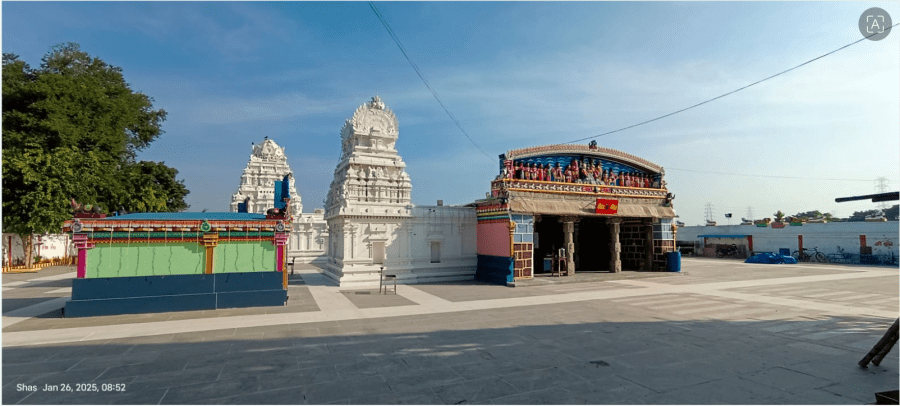
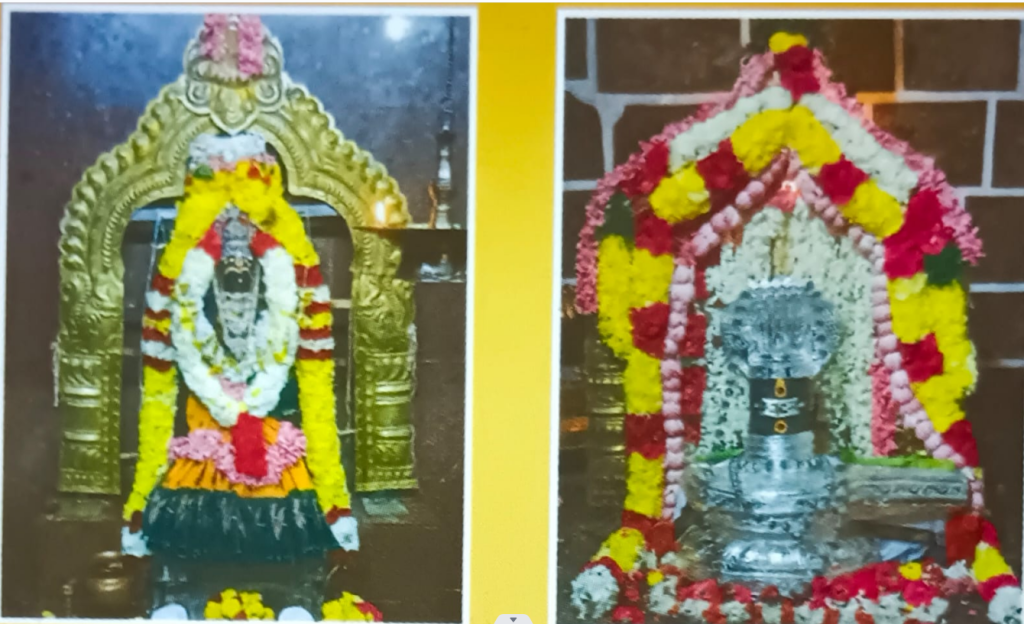
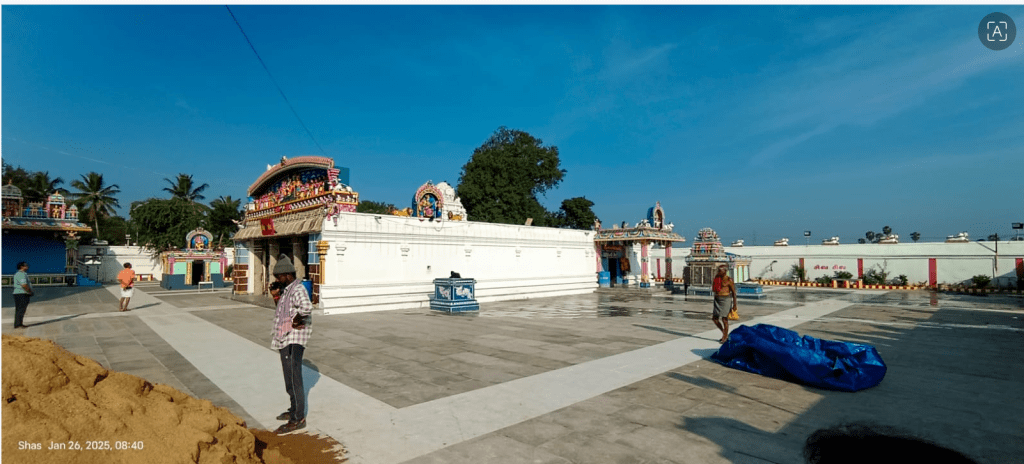
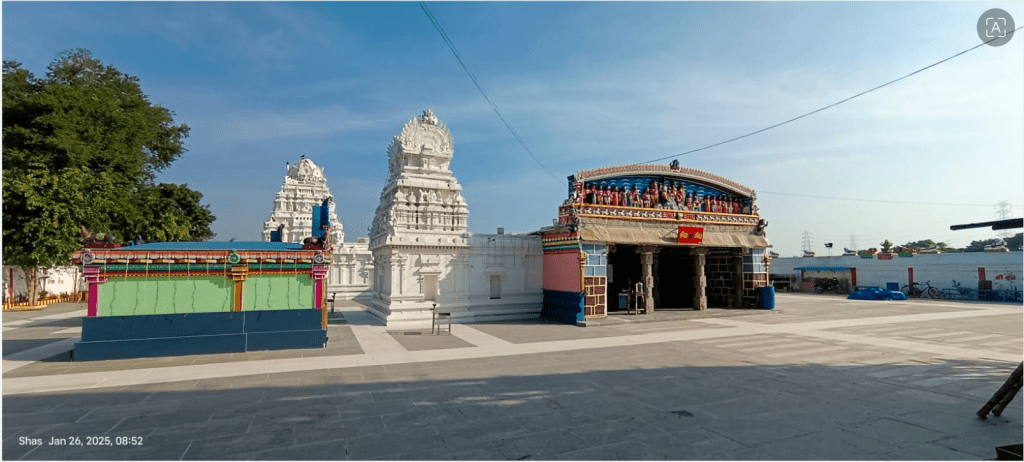
Today (January 26, 2025), I had the privilege of visiting the ancient Shri Varamuktheeswarar Temple in Karanodai, Thiruvallur district. Its around 44 KMs from Adyar and is locally known as Mahisasura Mardini or Erumai Vetti Palayam. It is believed to be 1800 years old and attributed to the Pallava dynasty.
During my visit, the priest informed that the temple was in disuse and regular poojas started some 30 years back. He highlighted a remarkable feature of the sanctum sanctorum. The Garbha Griha is enclosed on three sides which is typical of traditional South Indian temples. The remarkable aspect was that inside the Garbha Graha four lamps are perpetually lit, with three standing steady while the fourth sways continuously! This swaying lamp symbolizes Lord Shiva’s cosmic dance, the Tandava, creating a mesmerizing experience for all who witness it. Unlike the Sri Kalahasti Temple, where the swaying lamp (symbolizing Vayu) is hidden within the sanctum, here devotees can step into the Garbha Griha to observe this marvel firsthand.
The temple’s astronomical precision is another engineering marvel. On Tamil New Year, Panguni Uthiram, the sun’s rays align perfectly to illuminate the Shiva Linga in the sanctum through the temple’s entrance. At the same time, a small 6×6-inch opening in the eastern wall allows sunlight to grace the idol of Goddess Kamakshi Amman. The priest explained that both deities face east, with Kamakshi Amman’s sanctum positioned to the right of the presiding deity. This configuration is believed to bless devotees with marital harmony.
Just 1.5 kilometers from this site is the Bhadrakali Ramar Temple, perched on a small hillock. This unique temple is dedicated to both Lord Rama and Goddess Bhadrakali, seamlessly blending Vaishnavite and Shakta traditions. Currently undergoing gradual renovation, the temple’s upkeep is managed by Mr. Venkatakrishna Ramu and his family, who have been caretakers and performed poojas here for generations.
It was humbling to learn that neither of these temples receives financial support from the Hindu Religious and Charitable Endowments Department. Their upkeep relies solely on the contributions of local villagers and pilgrims.
This visit was a profound opportunity for me to experience the marvels of ancient Indian architecture and also witness its seamless integration with faith.
 Travel Memories